
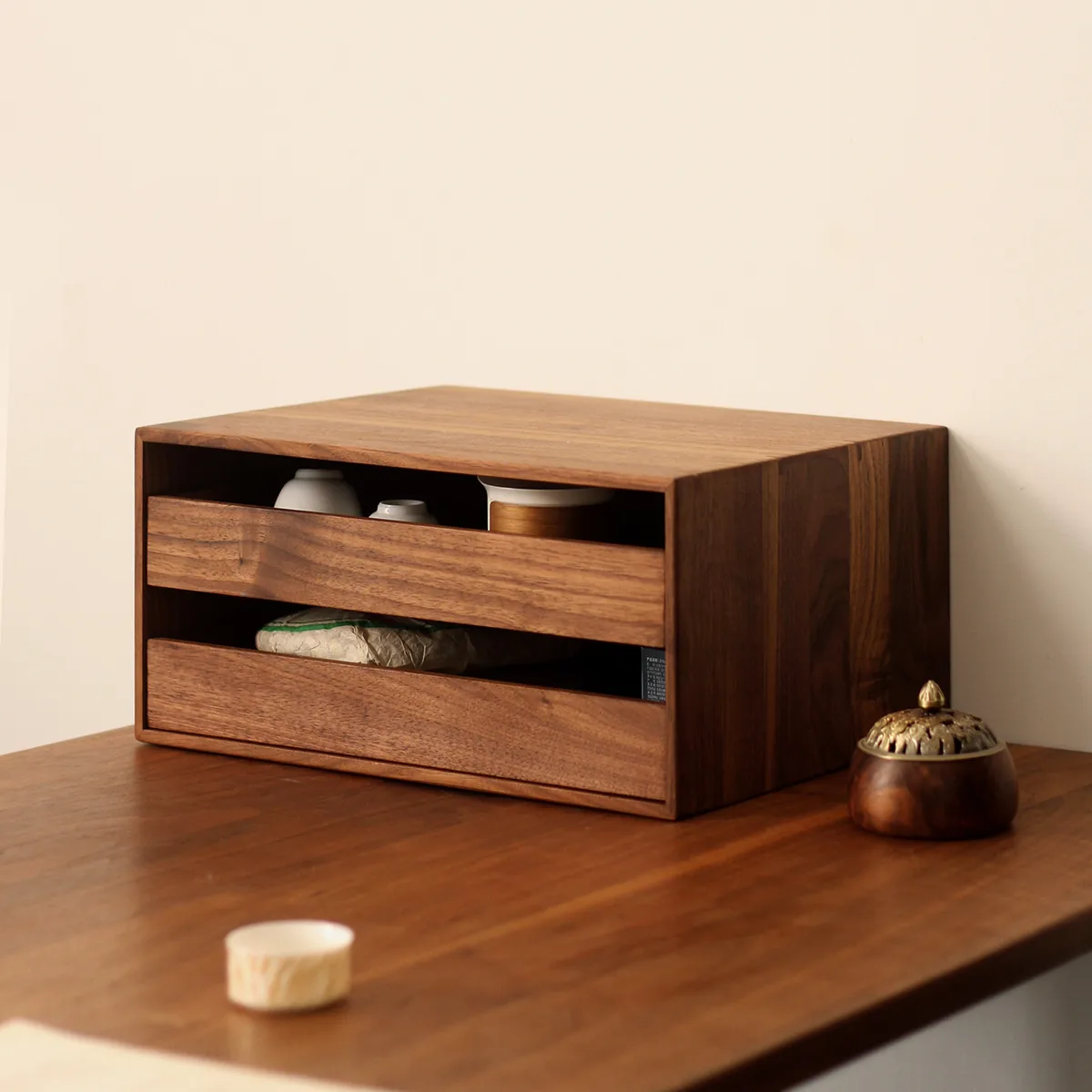
A useful request for quotation (RFQ) lets suppliers price the same product scope. Send a reference image or drawing, dimensions, intended use, material and finish direction, quantity by SKU, branding, packaging, sample requirements, destination, target dates, and acceptance criteria. Then ask every supplier to state what its price includes, excludes, and assumes. That structure makes the replies easier to compare than a request for “your best price” on an undefined product.
If your design needs development rather than a quote for an existing specification, review the custom wooden product development process before sending the RFQ.
Start with a quote-ready RFQ checklist
Use one brief and one version number for every supplier. Mark each item required, preferred, supplier to propose, or pending buyer decision. If a field is unknown, say so; an open question is more useful than an unstated assumption.
| RFQ section | What to send | What to ask the supplier to confirm |
|---|---|---|
| Product and use | Working name, product family, intended user, channel, target market | Whether the proposed design suits the stated use |
| References | Dimensioned drawing, sketch, photos, physical sample description, artwork; identify the controlling version | Missing files, conflicting references, and proposed changes |
| Dimensions and structure | Overall and critical internal dimensions, orientation, components, fit and load requirements where relevant | Proposed construction, tolerances, and feasibility questions |
| Material and finish | Required specification or appearance reference; indicate where alternatives are acceptable | Exact material, construction, finish proposal, and price-sensitive assumptions |
| Quantity and SKUs | Estimated units per SKU, number of variations, and useful quote breaks | Project-specific MOQ and unit price at each break |
| Branding and packaging | Logo artwork and placement; individual, retail, inner-pack, master-carton, label and barcode needs | Feasible application, packing method, included items, and separate charges |
| Sample and approval | Sample purpose, quantity, review criteria, and who approves the result | Sample scope, cost, freight, timing estimate, and approval dependencies |
| Quality and documentation | Buyer acceptance criteria and any required inspection, test, or market documents | What evidence is available for this product and what needs arranging |
| Delivery and commercial basis | Destination, target arrival window, requested trade term and currency | Production and transit assumptions, quote validity, exclusions, and buyer actions |
1. Make reference files unambiguous
Label each drawing or image with its version and purpose. A photo can show appearance but may not define dimensions or construction. A drawing can set dimensions but leave finish or packaging open. Identify which reference controls if they disagree. If a third-party product image is only inspiration, say what must differ in the proposed item.
For a first inquiry, a sketch with clear dimensions is useful. A final quotation may still require technical details that the sketch does not supply. Ask the supplier to list missing inputs rather than silently fill them in.
2. Separate fixed specifications from options
State critical dimensions, fit points, openings, moving parts, mounting or assembly requirements, and intended use. Do not invent tolerances to make the RFQ look complete. Where your team has no approved tolerance, ask for a proposed tolerance and the reasoning behind it.
If the exact material or finish is undecided, define the desired appearance and performance criteria, then request separately priced alternatives. Material availability, construction, and finishing need review against the actual design; a reference color does not by itself specify a production method.
3. Quote quantities by SKU, not as one combined number
An RFQ for three colors or two sizes should show the expected quantity of each variation. Ask for price breaks at volumes you might actually purchase. Mepalwood reviews order quantities by project. Send a product reference and your target quantity; the feasible minimum depends on the product, size, design, material, branding and packaging, and must be confirmed in the project quotation.
4. Define logo, packaging, and sample approval
Provide vector artwork where available, intended logo dimensions and placement, and an appearance reference. Ask which application method is feasible for the proposed surface and whether setup or artwork work is included.
Specify whether the quote covers product protection only, an individual retail pack, labels, inserts, barcodes, an inner pack, or a master carton. Custom packaging and labels can be reviewed and quoted separately by project. Ask for carton assumptions and destination handling requirements so packaging is not treated as an invisible line item.
Tell the supplier what the sample must prove: dimensions and fit, structure and function, visible finish, logo position, packaging fit, or another agreed point. Request the sample cost and international freight as separate items. The sample schedule and sign-off method should be confirmed for the specific design and approval scope.
5. Give dates and acceptance criteria that can be checked
Distinguish the launch date, required arrival date, and preferred shipment date. Include the destination and requested shipping basis. Ask the supplier to show schedule dependencies such as final files, sample approval, materials, packaging, payment, and shipping method. A project-specific schedule is more useful than an unqualified lead-time promise.
Replace “high quality” with buyer-defined acceptance points. Examples include critical dimensions, visible-surface appearance, fit and function, logo placement, label accuracy, and packaging condition. If your company requires a third-party inspection, sampling plan, testing, or destination-specific documentation, identify it in the RFQ and ask who will supply the evidence. Do not assume that a supplier’s ordinary checks satisfy your program.
Ask for a comparable quotation
Request replies in a common order:
- Proposed specification and any deviations from your files.
- Price by SKU and quantity break, with currency and trade term.
- Project-specific MOQ and what drives it.
- Sample scope, sample charge, international freight, and approval steps.
- Included packaging, separate packaging charges, and carton assumptions.
- Estimated schedule and each dependency.
- Quote validity, exclusions, open questions, and actions required from the buyer.
Compare scope before comparing unit price. A quotation that excludes retail packaging, sample freight, or required inspection is not directly comparable with one that includes them.
Illustrative example: one desk organizer SKU
Illustrative example only. This is a fictional buyer brief, not a Mepalwood customer project or evidence of a specific manufacturing capability.
Product: Desk organizer with a phone slot, pen compartment, and removable tray.
Files: Version 2 dimensioned sketch, front and side reference photos, and vector logo artwork.
Size: Approximate overall dimensions 280 × 160 × 80 mm; buyer marks phone-slot width as critical.
Appearance: Warm medium-brown, low-sheen reference; exact material and finish remain open for proposal.
Quantities: One SKU; request separate prices for 300, 600, and 1,200 units.
Branding and pack: One-color underside logo, individual retail carton, barcode label, protective insert, and master carton.
Sample: One functional sample to review dimensions, appearance, logo location, and packaging fit.
Destination and timing: U.S. delivery destination and a target arrival window supplied by the buyer.
Quote response: State proposed construction, project MOQ, sample and freight charges, packaging charges, schedule dependencies, exclusions, and unresolved questions.
The dimensions and quantities above are inputs in a fictional RFQ. They are not Mepalwood product specifications, price breaks, or confirmed order terms.
Before you send it
Check that your RFQ has one controlling file version, quantities per SKU, an explicit packaging scope, an approval purpose for the sample, a delivery destination, and a list of required evidence. Keep unresolved choices visible. This helps the supplier tell you what can be quoted now and what needs clarification.
For product scope, see the Mepalwood wooden product overview. When your brief is ready, send your RFQ to Mepalwood with the reference files and quantity expectations. Ask for a project-specific feasibility review and a quotation that separates confirmed scope from open assumptions.


